Gram-negative bacteria have a thin peptidoglycan layer wrapped in an outer membrane that carries lipopolysaccharide (LPS). The outer membrane blocks many antibiotics, and LPS — endotoxin — drives septic shock. Step 1 tests how to sort gram-negatives by shape, lactose fermentation, and oxidase, and how to link each organism to its disease, exposure clue, and drug.
Evidence-based · For exam prep, not medical advice
update Updated October 2026
Date of last content change
Built by surgery and anesthesiology residents
Written for USMLE Step 1 · Free to read
bolt The 60-second version
Gram-negative bacteria have a thin peptidoglycan layer wrapped in an outer membrane that carries lipopolysaccharide (LPS). The outer membrane blocks many antibiotics, and LPS — endotoxin — drives septic shock.
check_circleOuter membrane with LPS: lipid A is the toxic component that activates TLR4 on macrophages.
check_circleEndotoxin causes fever, hypotension, and DIC through TNF-α, IL-1, IL-6, and complement and coagulation activation.
check_circleCocci: Neisseria (diplococci) and Moraxella. N. meningitidis ferments maltose and glucose; N. gonorrhoeae ferments glucose only.
check_circleRods: lactose fermenters (E. coli, Klebsiella, Enterobacter) form pink colonies on MacConkey agar.
target What you'll be able to do · aligned to USMLE Step 1 · Microbiology — Bacteriology
MICRODescribe the gram-negative cell envelope and how lipid A of LPS causes septic shock.
MICROClassify gram-negative organisms by shape, lactose fermentation, oxidase, and culture requirements.
MICROMatch major gram-negative organisms to their exposures, toxins, and classic diseases.
PHARMExplain why gram-negatives resist some antibiotics and choose agents with gram-negative coverage.
How gram-negative bacteria are tested on Step 1
Expect an exposure clue (undercooked poultry, a hot tub, a cat scratch, a ventilator) plus a lab clue (lactose fermentation, oxidase, H₂S, growth medium) and a question about the organism, its toxin, or the antibiotic.
workspace_premium Endotoxin vs exotoxin
Endotoxin is a structural part of every gram-negative cell wall, released on lysis, heat-stable, and poorly immunogenic. Exotoxins are secreted proteins, made by both gram-positive and gram-negative species, heat-labile, and the basis of toxoid vaccines.
The cell envelope and endotoxin
From outside in, the gram-negative envelope has an outer membrane (LPS, porins), a periplasmic space containing β-lactamases, a thin peptidoglycan layer, and the inner cytoplasmic membrane.
Endotoxin cascade. Lipid A is the toxic moiety; the O antigen is the variable, antigenic outer chain used to serotype organisms such as E. coli O157.
The identification algorithm
Most gram-negative questions start with shape and lactose fermentation on MacConkey agar.
Gram-negative tree. Among non-fermenters, Pseudomonas is oxidase-positive; Salmonella and Proteus produce H₂S, and Shigella does not.
Whooping cough; toxin raises cAMP by inactivating Gi
Zoonotic gram-negatives (Bartonella from cats, Pasteurella from bites, Francisella from rabbits, Brucella from unpasteurized dairy) show up as exposure clues.
Treatment and resistance
Gram-negatives resist many drugs because the outer membrane limits entry and periplasmic β-lactamases destroy β-lactams.
Spectrum follows structure. Extended-spectrum β-lactamase (ESBL) producers need a carbapenem; carbapenem-resistant Enterobacterales (CRE) may need newer combinations or polymyxins.
functions Worked example — read the culture
A 30-year-old man with a burn over 40% of his body develops fever. Wound culture grows an oxidase-positive, non-lactose-fermenting gram-negative rod with a blue-green pigment. Which antibiotic has activity?
Oxidase-positive, non-fermenting, pigmented gram-negative rod in a burn wound means Pseudomonas aeruginosa.
Pseudomonas is intrinsically resistant to many β-lactams and to vancomycin.
Antipseudomonal options include piperacillin-tazobactam, cefepime or ceftazidime, carbapenems (not ertapenem), aztreonam, aminoglycosides, and ciprofloxacin.
Answer. An antipseudomonal agent such as cefepime or piperacillin-tazobactam — not vancomycin, nafcillin, or ceftriaxone.
Straight from the Progress Note question bank, each with a cited explanation. No account needed.
123
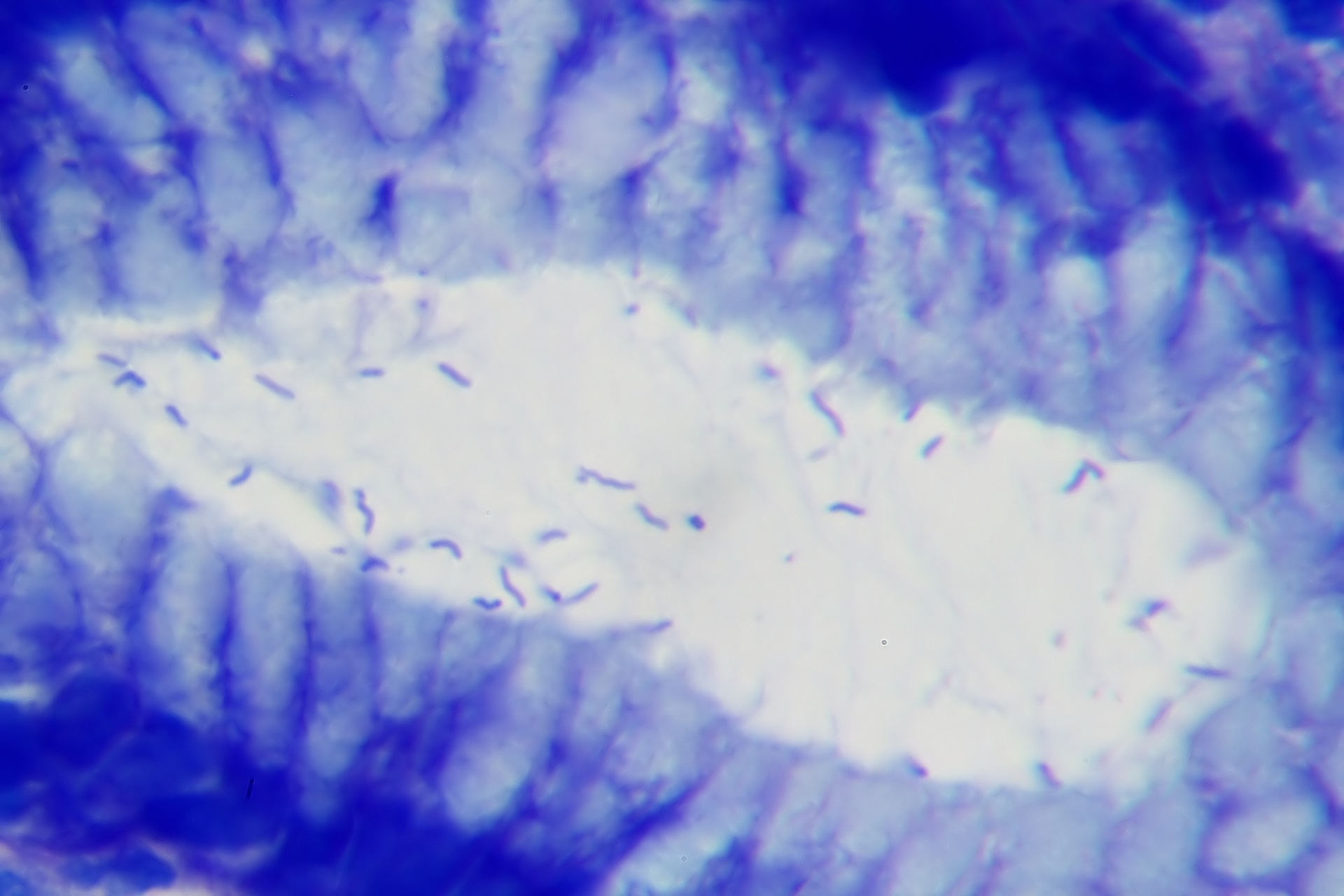
A biopsy of gastric mucosa shows curved, gram-negative rods in the mucus layer. Which virulence factor allows this organism to survive in the acidic environment?
Patho, CC BY-SA 3.0 <https://creativecommons.org/licenses/by-sa/3.0>, via Wikimedia Commons
Answer: B. Helicobacter pylori produces urease, which converts urea to ammonia, neutralizing gastric acid and allowing survival. Exotoxin A is associated with Pseudomonas, and endotoxin is a general feature of gram-negative bacteria. While motility helps colonization, urease is critical for acid resistance. Capsule formation aids immune evasion but not acid neutralization.
Source: Kusters, et al. (2006). Pathogenesis of Helicobacter pylori infection. Clinical Microbiology Reviews.
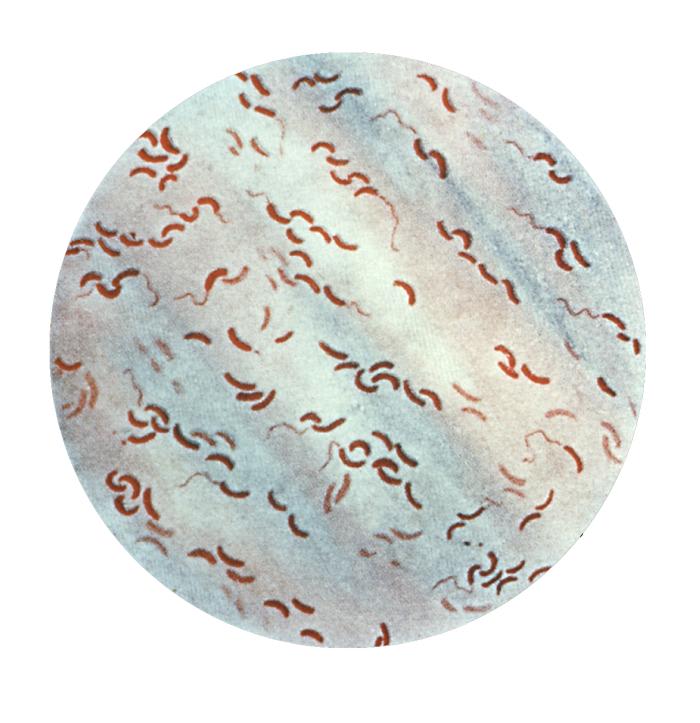
A stool sample from a patient with profuse watery diarrhea shows curved, comma-shaped gram-negative rods. Histologic examination of intestinal biopsy demonstrates disruption of tight junctions with increased chloride secretion. Which virulence mechanism is most directly responsible for this presentation?
CDC, Public domain, via Wikimedia Commons
Answer: A. Vibrio cholerae causes secretory diarrhea via cholera toxin, which ADP-ribosylates the Gs protein, leading to persistent activation of adenylate cyclase and increased cAMP. This results in chloride and water efflux into the intestinal lumen, producing profuse watery diarrhea. Endotoxin-mediated macrophage activation is more typical of septic shock from gram-negative bacteremia. Urease activity is associated with Helicobacter pylori, not intestinal secretory diarrhea. Shiga toxin inhibits protein synthesis and causes bloody diarrhea rather than pure watery diarrhea.
Source: Kanungo, et al. (2022). Cholera. The Lancet.
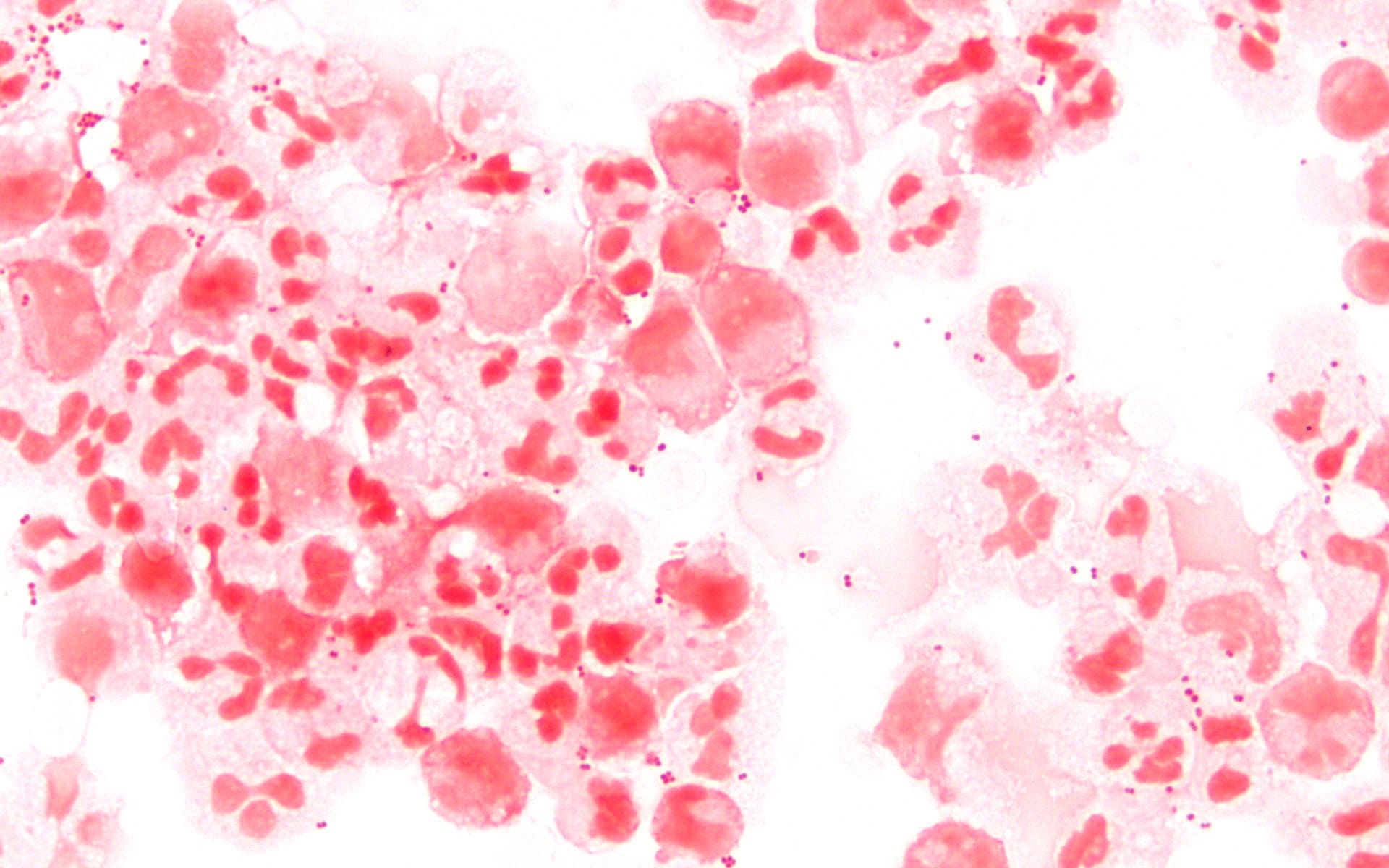
A 19-year-old college student presents to the emergency department with fever, severe headache, nuchal rigidity, and a non-blanching petechial rash on the trunk and lower extremities. A lumbar puncture is performed and the CSF Gram stain shows the image finding: Gram-negative diplococci within neutrophils. Which of the following best describes the virulence mechanism responsible for the rash in this patient?
Microman12345, CC BY-SA 4.0 <https://creativecommons.org/licenses/by-sa/4.0>, via Wikimedia Commons
Answer: D. Neisseria meningitidis produces a potent lipopolysaccharide (LPS/endotoxin) that triggers systemic release of TNF-α and IL-1, activating both the complement and coagulation cascades. This leads to disseminated intravascular coagulation (DIC), causing the characteristic non-blanching petechial and purpuric rash (purpura fulminans) due to microvascular thrombosis and hemorrhage. Exotoxin A (option A) is a virulence factor of Pseudomonas aeruginosa, not N. meningitidis. IgA protease (option C) is produced by N. meningitidis to evade mucosal immunity but does not cause the rash. Protein A (option B) is a virulence factor of Staphylococcus aureus. Capsular polysaccharide (option E) functions to inhibit phagocytosis, not to lyse platelets.
Source: Stephens, et al. (2007). Epidemic meningitis, meningococcaemia, and Neisseria meningitidis. Lancet, 369(9580), 2196–2210.
Your next questions are ready.
The question bank picks up from here: it adapts to what you just missed and brings it back right before you'd forget it.
Why do gram-negative bacteria stain pink?expand_more
Their thin peptidoglycan layer cannot hold the crystal violet–iodine complex during alcohol decolorization, so they take up the pink safranin counterstain.
What part of LPS causes septic shock?expand_more
Lipid A. It binds CD14 and TLR4 on macrophages, triggering TNF-α, IL-1, and IL-6 release, nitric oxide–mediated vasodilation, and activation of coagulation that can progress to DIC.
Which gram-negative bacteria ferment lactose?expand_more
Escherichia coli, Klebsiella, Enterobacter, Citrobacter, and Serratia (late fermenter). They form pink colonies on MacConkey agar.
Why doesn't vancomycin work against gram-negative bacteria?expand_more
Vancomycin is a large glycopeptide that cannot pass through outer-membrane porins to reach the peptidoglycan.
Study smarter with a short weekly email. No spam — unsubscribe anytime.
✓ You're in — talk soon.
Reading is one thing. Remembering is another.
Turn this guide into questions you’ll actually remember
Progress Note turns concepts like this into adaptive questions and spaced review, so difficult topics come back to you exactly when you’re about to forget them.