The Feynman Technique is a learning method built on explaining a concept in plain language as if teaching it to someone else. The act of simplifying quickly exposes the gaps in your understanding, which makes it powerful for the mechanism-heavy material found in medicine and the sciences.
edit_note
Progress Note Editorial
Evidence-based · For exam prep, not medical advice
update Updated October 2026
Date of last content change
Built by surgery and anesthesiology residents·Written for USMLE Step 1
bolt The 60-second version
check_circlePick a concept and explain it in simple language as if teaching a beginner.
check_circleWherever you get stuck or vague, you have found a gap to review.
check_circleReturn to the source, fill the gap, then simplify again.
check_circleIt forces active retrieval and genuine understanding, not just recognition.
check_circleAnalogies and plain words are signs you truly understand a concept.
The Four Steps
The technique has four steps. First, choose a concept and write its name at the top of a page. Second, explain it in the simplest language you can, as if teaching a curious beginner, using plain words and examples. Third, notice every point where your explanation becomes vague, hand-wavy, or stuck — those are your knowledge gaps — and go back to your source to relearn them. Fourth, refine and simplify the explanation, replacing jargon with analogies.
Why It Works
Explaining forces active retrieval: you must reconstruct the idea from memory and organize it coherently, which is far more demanding — and more effective — than rereading. Simplifying is a stringent test of understanding, because you cannot hide behind memorized jargon when you have to make an idea clear to a novice. The gaps that surface tell you exactly what to study next.
Applying It in Medicine
Medicine is full of mechanisms that reward this approach: explain how an ACE inhibitor lowers blood pressure, why a loop diuretic causes hypokalemia, or how an action potential propagates, out loud or on paper, without notes. Teaching a study partner is a natural version of the same test. If you cannot explain the pathway simply, you have found the concept to revisit before an exam.
Combining With Other Methods
The Feynman Technique pairs well with the rest of a study system. Use it after a first pass of content review to consolidate understanding, and combine it with active recall and spaced repetition to keep what you have clarified. It is especially useful for the highest-yield or most confusing topics, where a clear mental model prevents errors on application questions.
Try it now
Try 3 real questions
Straight from the Progress Note question bank, each with a cited explanation. No account needed.
123
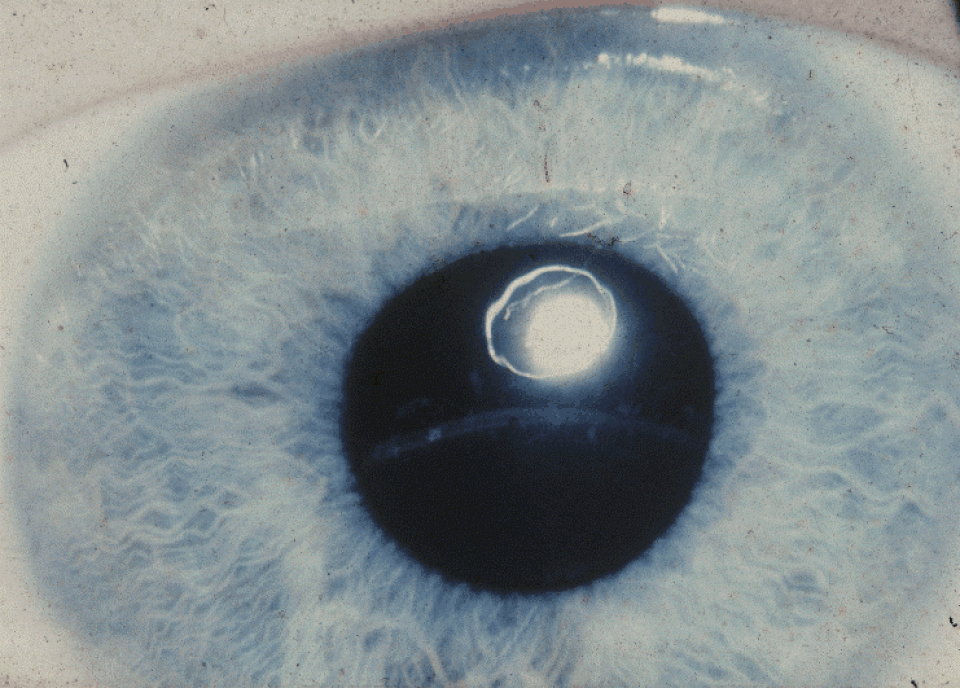
A tall, thin 10-year-old boy has intellectual disability and a history of an unprovoked deep vein thrombosis. A photo of his slit-lamp exam is shown below. Urine nitroprusside testing is positive, and plasma amino acid analysis shows markedly elevated homocysteine and methionine. Which enzyme deficiency and mechanism best account for both the connective tissue and thrombotic findings?
National Eye Institute, Public domain, via Wikimedia Commons
Answer: A. Classic homocystinuria results from cystathionine beta-synthase deficiency, which blocks the transsulfuration pathway and causes accumulation of both homocysteine and its precursor methionine; elevated homocysteine promotes endothelial damage and a prothrombotic state (explaining the thromboembolic risk) and also interferes with normal lysine-derived collagen and elastin cross-linking, contributing to the connective tissue laxity responsible for lens dislocation (characteristically downward, helping distinguish it clinically from the upward lens dislocation typical of Marfan syndrome) and skeletal features. Option B incorrectly proposes MTHFR deficiency, which causes homocystinuria with low (not elevated) methionine due to impaired remethylation, the opposite pattern from what is described. Option C incorrectly attributes the findings to a fibrillin-1 structural defect, the mechanism underlying Marfan syndrome, a distinct condition with a different lens dislocation direction and no thrombotic predisposition. Option D incorrectly dismisses the enzymatic block, attributing methionine elevation to diet alone. Option E incorrectly substitutes an unrelated primary platelet disorder for the amino acid metabolism defect actually responsible.
Source: Morris, A. A., et al. (2017). Guidelines for the diagnosis and management of cystathionine beta-synthase deficiency. Journal of Inherited Metabolic Disease.
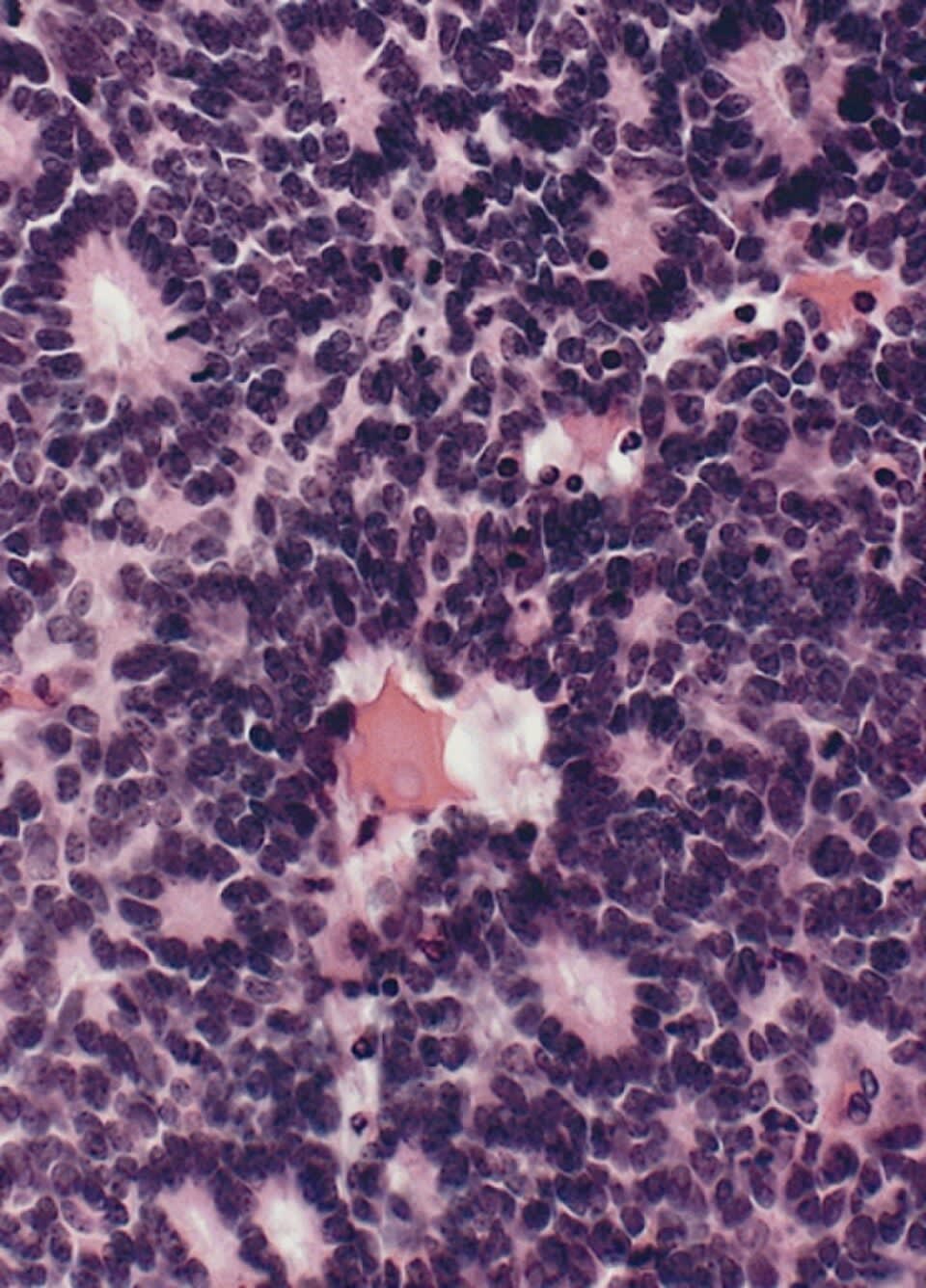
What is the diagnosis?
The Armed Forces Institute of Pathology (AFIP), Public domain, via Wikimedia Commons
Answer: E. Retinoblastoma, the most common intraocular malignancy of childhood, arises from biallelic loss of the RB1 tumor suppressor gene and classically presents with leukocoria. Histology shows small round blue cells forming Flexner-Wintersteiner rosettes, distinguished by a true central lumen, unlike the Homer-Wright rosettes (cells encircling a tangle of neural processes without a lumen) seen in neuroblastoma and medulloblastoma. Ewing sarcoma shows sheets of small round blue cells without rosette formation, and astrocytic hamartomas show bland, glial-appearing cells rather than malignant small round blue cells.
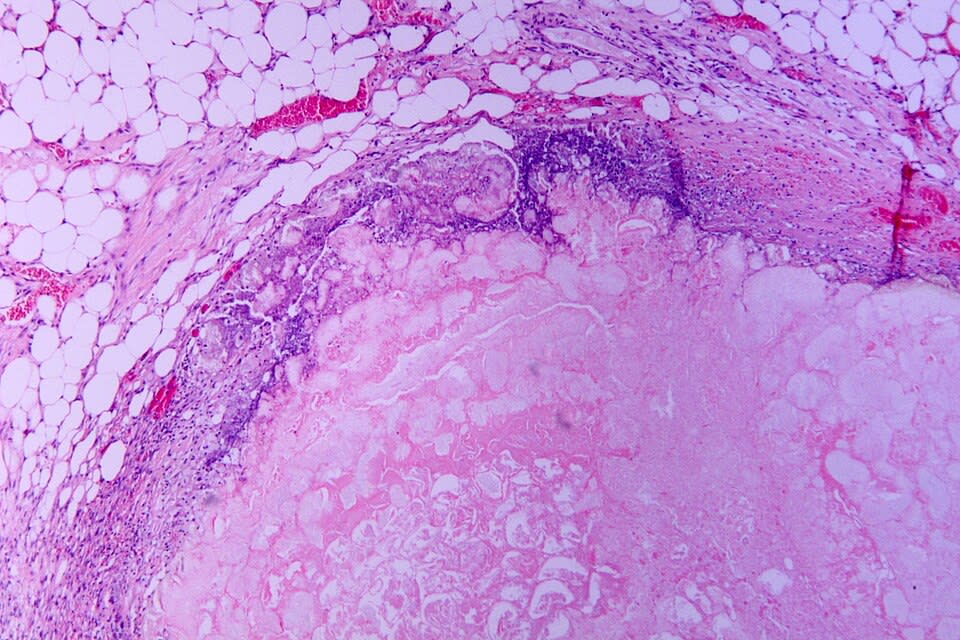
A patient presents with severe epigastric pain radiating to the back. Serum lipase is elevated. Histology shows fat necrosis with calcium soap formation. Which process is responsible?
Patho, CC BY-SA 3.0 <https://creativecommons.org/licenses/by-sa/3.0>, via Wikimedia Commons
Answer: E. Acute pancreatitis is caused by premature activation of pancreatic enzymes, especially trypsin, leading to autodigestion of pancreatic tissue. Lipase release causes fat necrosis and saponification due to calcium binding. Bile reflux is a contributing factor but not the primary mechanism. Viral infection is not typical. Autoimmune pancreatitis is a distinct chronic condition.
Source: Forsmark, et al. (2016). Acute pancreatitis. New England Journal of Medicine.
Your next questions are ready.
The question bank picks up from here: it adapts to what you just missed and brings it back right before you'd forget it.
What are the four steps of the Feynman Technique?expand_more
The four steps are: choose a concept and write it down; explain it in simple language as if teaching a beginner; identify the points where your explanation breaks down and relearn them from your source; and refine and simplify the explanation using plain words and analogies.
Why does the Feynman Technique work?expand_more
It works because explaining a concept forces active retrieval and organization from memory, and simplifying it is a strict test of true understanding. When you cannot explain something clearly, you have precisely located the gap you need to study.
Is the Feynman Technique good for medical school?expand_more
Yes. Medicine is full of mechanisms and pathways that reward genuine understanding over memorization. Explaining a mechanism in plain language — or teaching it to a peer — exposes shaky areas and builds the clear mental models needed for application-style exam questions.
How is the Feynman Technique different from just rereading?expand_more
Rereading is passive and creates a false sense of familiarity. The Feynman Technique is active: you reconstruct and simplify the idea from memory, which both strengthens retention and reveals exactly what you do not yet understand.
Free weekly high-yield email
One high-yield concept + one question, every week
Study smarter with a short weekly email. No spam — unsubscribe anytime.
✓ You're in — talk soon.
Practice makes permanent
Lock this into long-term memory
Progress Note's adaptive engine spaces your reviews automatically — so this stays with you through boards and onto the wards.