How hepatitis B is tested on Step 1
Most questions give a serology panel and ask for the patient's status. Others test virology, transmission, or associated diseases.
| HBsAg | Anti-HBs | Anti-HBc | HBeAg | Interpretation |
|---|---|---|---|---|
| + | − | IgM | + | Acute infection, highly infectious |
| − | − | IgM | − | Window period (recovering acute infection) |
| − | + | IgG | − | Recovered, immune from natural infection |
| − | + | − | − | Immune from vaccination |
| + | − | IgG | + or − | Chronic infection (HBeAg+ = high replication) |
HBcAg itself is not detected in serum; only antibodies to it are measured.
Virology and transmission
HBV is a DNA virus that uses reverse transcriptase.
- Structure: enveloped hepadnavirus with partially double-stranded circular DNA; DNA polymerase with reverse transcriptase activity.
- Transmission: blood, sexual contact, and perinatal (mother to child). It is far more infectious by needlestick than HCV or HIV.
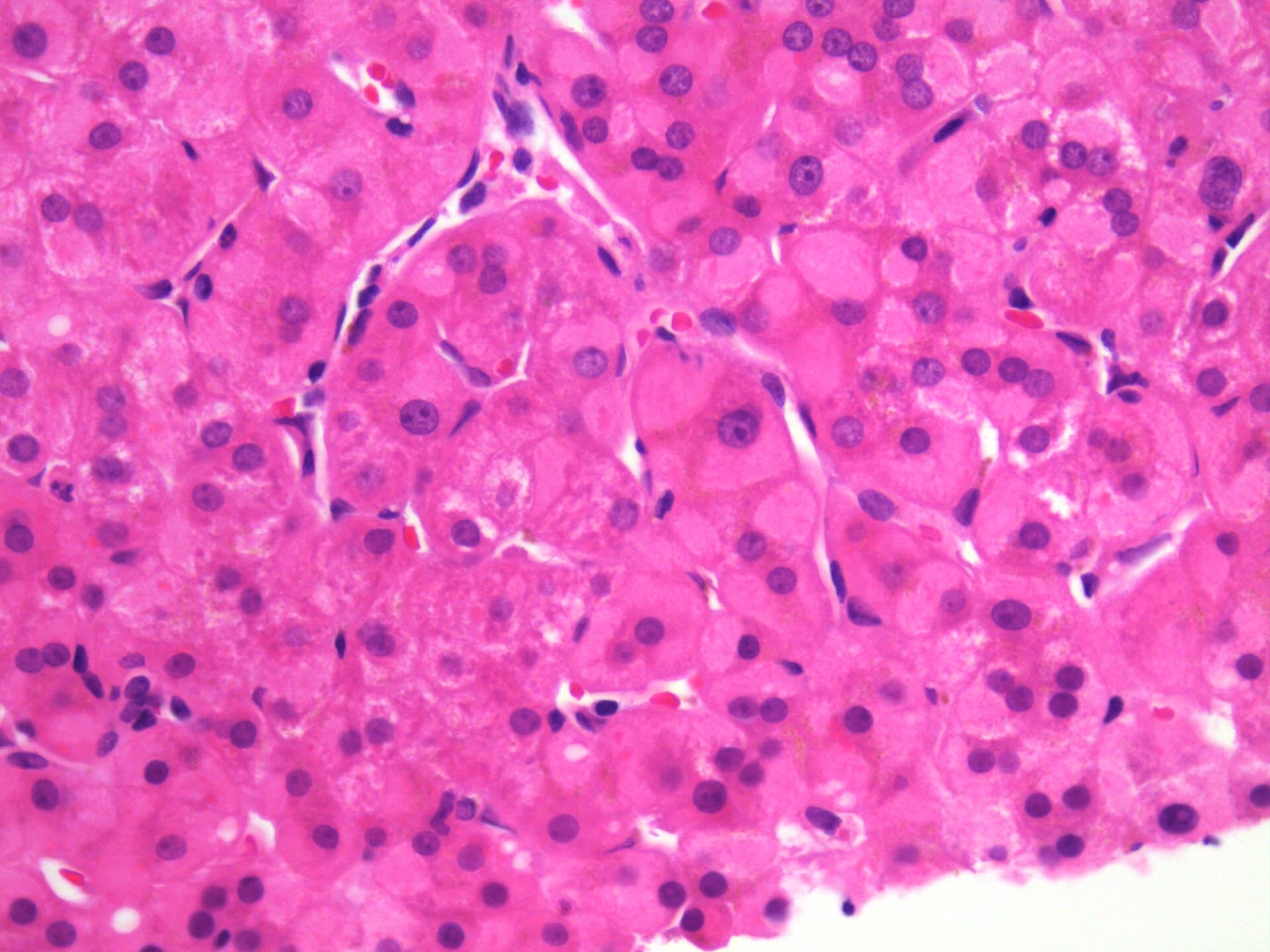
- Histology: "ground-glass" hepatocytes from accumulated HBsAg; liver damage is mainly from the cytotoxic T-cell response, not the virus itself.
- Chronicity by age: about 90% of perinatal infections, 25–50% of infections at ages 1–5, and fewer than 5% of adult infections become chronic.
Complications and extrahepatic disease
Chronic HBV causes liver and immune-complex disease.
Prevention and treatment
Know the vaccine and the antiviral classes.
- Vaccine: recombinant HBsAg (a subunit vaccine) → anti-HBs only. Given to all infants starting at birth.
- Infants of HBsAg-positive mothers: hepatitis B vaccine plus hepatitis B immune globulin (HBIG) within 12 hours of birth.
- Chronic HBV drugs: nucleos(t)ide reverse transcriptase inhibitors such as tenofovir and entecavir (suppress replication); pegylated interferon-α in selected patients.
- Needlestick from an HBsAg-positive source: unvaccinated people receive HBIG and the vaccine series.
Worked example
Read the panel step by step.
functions Worked example — the confusing panel
A 30-year-old had jaundice 3 months ago that has resolved. Labs: HBsAg negative, anti-HBs negative, anti-HBc IgM positive, HBeAg negative. What is her status?
- HBsAg negative: no detectable surface antigen now.
- Anti-HBs negative: no protective antibody yet.
- Anti-HBc IgM positive: recent acute infection.
- This combination is the window period between HBsAg clearance and anti-HBs appearance.
Answer. Window period of a resolving acute hepatitis B infection.